Dos Voces, Un Destino: Don Vic

En El Salvador el Día de Los Padres se celebra el 17 de Junio.  Le contamos la historia de nuestro padre en su honor.

Don Vic

Don Vic

Victorino Rodezno nació en 1920, hijo de Pedro Rodezno y Isabel Callejas de Rodezno.   Ellos vivían en Tamanique, un pueblito como 20 kilometres de la costa en las montañas de El Salvador.  La familia Rodezno tiene raíces ondas en el pueblito.  La familia tenía potreros, fincas, una tiendita, y la cantina del pueblo.

Papá era el hijo mayor.   Él se crio durante el tiempo de la gran depresión.  Tiempo de muchas dificultades económicas.  Aunque la Familia Rodezno no eran pobres, la familia siempre acido trabajadora.  Trabajando los terrenos y la tienda.  Papá cuenta historias de mi abuelito, “El Viejito,” Papá Pedro.  Papá Pedro era conocido por ser con mucha compasión.  “Al viejito lo buscaban que fuera a curar la gente. Lo buscaban como médico.”  Papá discutía con su padre porque Papá Pedro era mujerío y alcolico.  Tomaba mucho; murió por el alcohol.    Papá le tenía mucho respeto y cariño a su mamá, “Chavelita.”  Mamá Chávela manejaba todo el negocio de la familia, cuidando ganado y atendiendo la tienda.

Cuando papá era jovencito, estaba ayudando a sacar el bálsamo.  El mecanismo se desprendió y le dio en la cabeza, quebrando la.  Todos pensaron que papá iba a morir pero el sobrevivió.  Papá todavía tiene la cabeza sumida donde se quebró el cráneo. Continue reading “Dos Voces, Un Destino: Don Vic” »

Family Dynamics – Facing a New Normal, Together

Family Dynamics When a loved one is diagnosed with Alzheimer’s disease there will almost certainly be issues relating to family relationships. First, normal roles change. A son suddenly becomes his mother’s caregiver, reversing their lifelong roles. Over time, a couple’s relationship changes as caregiving becomes the priority. Life plans, retirement plans, all the things you put off for the future, those things change and may in fact disappear completely. Roles of the caregiver change within their own family as well; a caregiver’s children may feel infringed upon when Grampa needs mom’s constant attention and focus. Continue reading “Family Dynamics – Facing a New Normal, Together” »

Exciting Science From This Year’s Researchers Symposium!

XraysAbout 100 Alzheimer’s Scientists gathered Monday at the Alzheimer’s Association Researchers Symposium. This annual event is organized by the volunteer Medical and Scientific Advisory Council of the Alzheimer’s Association, Northern California and Northern Nevada Chapter. It brings together researchers from across our Chapter to share ideas, present new data, network and celebrate young researchers.

This year, we held the Symposium at UC Berkeley and heard from scientists who address research in the areas of the ApoE Alzheimer’s risk gene, network dysfunction and new ideas in clinical trials. There were two presentations I found particularly interesting during this year’s event. Continue reading “Exciting Science From This Year’s Researchers Symposium!” »

A Son’s Letter to His Mother with Alzheimer’s Disease

About a year ago, Cynthia got lost on the way to her favorite ice cream place – one she had been to time and time again. When she finally found it, ordered herself a treat and got on the road home, she was alarmed to realize she couldn’t figure out how to drive across the street, becoming disoriented with the number of bright headlights and speed and number of the cars. In the weeks that followed this incident, she was diagnosed with Alzheimer’s disease.

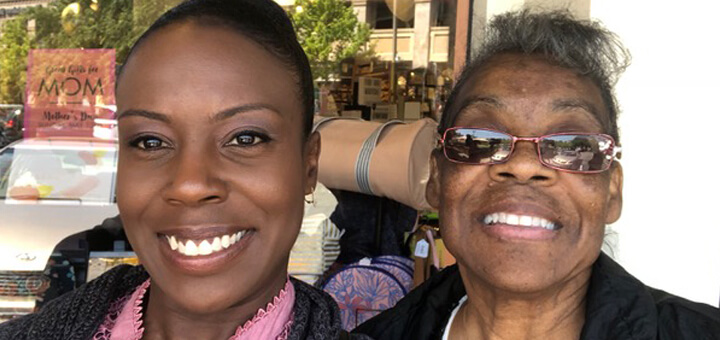
Cynthia and her son on Mother's Day

Cynthia and her son on Mother’s Day

Cynthia, 64, has become a passionate advocate for individuals with Alzheimer’s disease and their families, attending advocacy meetings, support groups and speaking at events. She recently moved to a retirement community in Napa, Calif., to be close to her son, who is her primary caregiver. She shared with us a letter her son wrote to her about the present and the future.

Mom,

I don’t want you to worry or be afraid. Let’s enjoy every single day and not think too much about whether you can remember as well as you could in the past.

I will watch over you and won’t let anything bad happen to you. If the time comes when we need to do more for you, I will make sure you have everything you need to have a great quality of life.

I wish I could change things. I wish I could take your illness for you but I can’t. All I can do is be there for you and love you.

Summer Travel – Structure vs. Spontaneity!

3d illustration: Land and a group of suitcases. To take a vacation rentalWe hear from a lot of people about the challenges of traveling. While traveling can be a wonderful respite for everyone involved, especially in early stages of the disease, it does require special planning. Travel impacts routine, schedule and familiarity (with people and surroundings), all of the hallmark comfort criteria for people with Alzheimer’s. Changes in routine and location can trigger stress and disorientation. Each person’s situation is a bit different; talk with your loved one’s doctor about your particular travel plans.

General Travel Tips

Whether a quick trip in the car, or a long-distance trip across the country, a bag of essentials should always be at your side, including extra clothing, snacks, water, medications, activities and relevant toileting supplies. Carry meds in their original prescription bottles. Always carry emergency contact info, photocopies of important documents (insurance, medications, Power of Attorney, advanced directive) and a recent photo of your loved one (in case they wander). Have your loved one wear identification indicating that they have Alzheimer’s, or consider GPS enabled shoes if they won’t leave an ID on. Enroll in the MedicAlert® and Alzheimer’s Association Safe Return® program.

Consider an anti-anxiety medication for travel, and ask whether it is okay to take a “dry run” prior to the trip; some people experience side-effects. Perhaps even take a mini-trip trial run prior to a lengthier trip. Know your limitations and strength. If there have been difficult moments controlling agitation or anxiety in the past, realize that could re-occur. You should consider wearing identification yourself indicating you are a caregiver for an Alzheimer’s patient. If something happens to you, authorities know there is a possible issue with your loved one, especially when traveling.

Family Visits

Visiting family can take your loved one back to a place where they grew up, triggering forgotten memories as well as providing distant family a chance to re-connect. It can also provide respite to you as caregiver. Schedule lots of downtime, consider eating meals at home, and remain on a normal schedule. Can you bring your loved one’s pet, or a favorite pillow or blanket? Ask your host family members to “Alzheimer’s proof” their home. If relevant, prepare family members – especially children – for any hostile or unusual behaviors that may occur. If the host home is too chaotic, consider staying in a hotel so there will be a quiet retreat available.

Pleasure Visits/Touring

Minimize chaotic locations or activities where locations are constantly changing (sight-seeing tour). Disorientation can quickly occur, triggering stress and possible behavioral issues or wandering. There are logistics and safety concerns relating to transportation, hotels and meals.

If you decide your loved one and you are up to the task, you might still consider bringing help or looking into whether help is available at your destination point. As much as you can, have a Plan B, starting with travel insurance for the trip, in case a trip must be cancelled at the last minute. Some travel insurance may not cover dementia. Make all tickets refundable and changeable.

Many people travel with their loved one with the goal of respite for all. Unfortunately, sometimes that isn’t realistic. If respite is truly your goal, don’t feel guilty about scheduling your own trip as a break from your caregiving duties. Have a family member come to stay with your loved one while you take a break. Your mental refresh will help everyone involved.

Flying

Book your flights so you don’t have any tight connections or layovers. Allow extra time for everything. You might request a wheelchair whether your loved one needs it or not. TSA Cares is a free helpline to help you with any special needs relating to security screening and carryon luggage (should you need to bring medications or supplies). Book a middle seat for your loved one and keep the aisle seat for yourself; this enables you to keep them in their seat, while still allowing a trip to the restroom without climbing over other passengers. You should carry all documentation, including passports. Board early. If your loved one is in a late stage of Alzheimer’s you could consider a medical flight service.

Hotels

Notify your hotel that your loved one has Alzheimer’s. You may want to order room service until your loved one feels more acclimated. Bring a water-proof bed-pad for the hotel bed if incontinence is a concern. Bring a night-light to ensure a well-lit path to the bathroom. Purchase bells and tie on your loved one’s shoe strings or on the hotel door-knob, to alert you to potential wandering.

Bottom line is that a trip with your loved one can be a great idea if they are up to the trip and if you have a flexible and adaptable attitude. Don’t take things personally if it doesn’t work out, sometimes the break from routine is just too much for people to deal with. Once home, also recognize there will probably be an adjustment period before your loved one gets back into their pre-travel routine.

Staying Independent – “Help me help myself”

57278898_hi-rezAfter being diagnosed with Alzheimer’s disease, how long can you remain independent? In the early stages of the disease many people are able to retain their independence fairly well and the mental health benefits of remaining self-reliant are huge. Attempt to keep active and engaged, and continue doing the things you enjoy.

At the same time, it’s best to educate those around you about the changes that will occur as the disease progresses. Educating people helps them help you remain more independent. Talk to your employer about ways to continue working, perhaps reducing your hours or responsibilities. Ensure your home is safe; check your home for ways to reduce the chances of a fall or a fire. Consider finding alternatives to driving; remember the disease impacts your judgment as well as physical abilities, so you will have to make unpleasant adjustments as the disease progresses. Use the Alzheimer’s Navigator tool to help with mapping out your long-term care strategy, and get your legal and financial matters in order; do it while you can be an active participant and decision-maker. Continue reading “Staying Independent – “Help me help myself”” »

Copyright © 2013 Alzheimer's Association. All Rights Reserved.

Through this website you are able to link to other websites which are not under the control of the Alzheimer’s Association. We have no control over the nature, content and availability of those sites. The inclusion of any links does not necessarily imply a recommendation or endorse the views expressed within them.

Chapter Headquarters
Alzheimer's Association of Northern California and Northern Nevada
1060 La Avenida, Mountain View, CA 94043 Phone 650.962.8111

National Headquarters
Alzheimer's Association National Office 225 N. Michigan Ave., Fl. 17, Chicago, IL 60601 Alzheimers and Dementia Blog – Alzheimers Association of Northern California and Northern Nevada

Built on Notes Blog Core
Powered by WordPress