What Do You Mean I Can’t Drive?

Good morning and happy National Caregivers Month! During each week in November, I am going to highlighting a different caregiving issue. This week, we’re tackling driving.

A topic that comes up regularly with caregivers is the difficult time they have convincing the loved one with a diagnosis of dementia that he or she should stop driving. It seems that not all medical personnel report a dementia diagnosis to the Department of Motor Vehicles, and so the family is faced with being the deliverer of this unwelcomed news.
Continue reading “What Do You Mean I Can’t Drive?” »

John confesses to Angie: “I’m really sad.”

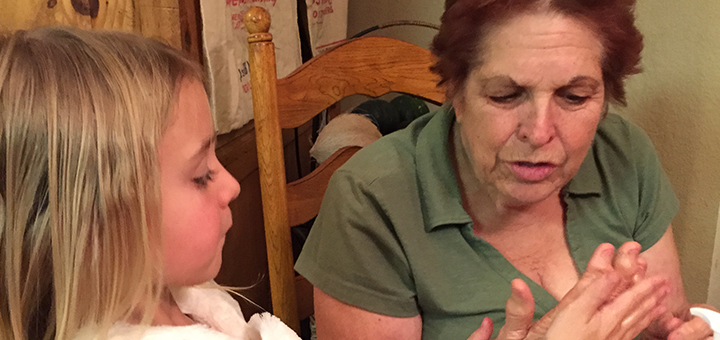
We were sitting at the dinner table, just finishing up our evening meal when John looked at me and said, “I’m really sad.”

I stopped fussing with the plates and gave him my full attention. “Why are you sad?”

“I’m sad because I’m leaving you. Alzheimer’s is making me leave you. I’m dying.”

I got up to hug my husband. Although I tried to comfort him by saying that none of us really knew where and when they would die. In my heart I knew that John believed what he was saying. He was actually fading away. Continue reading “John confesses to Angie: “I’m really sad.”” »

NYT Readers expand on how medicare fails the elderly

Reading the letters to the editor section of the newspaper is appealing to me. If published in a well-respected periodical, such letters can provide even more insight into an issue than the original article, as they often represent various viewpoints.  So, it was with interest that I read the letters in response to the October 16, 2011 New York Times article How Medicare Fails the Elderly.  The article’s premise was that costly and sometimes inappropriate, even harmful, procedures and treatments can be willingly paid for by Medicare while denying funding for what people really need.

No question these are thorny issues. They raise complex and challenging ethical concerns and often surface conflicting, emotionally laden, and/or confusing family beliefs and values.  I found that the letters to the editor in response to this article echoed the philosophy of many an Alzheimer’s advocate, including the need to: Continue reading “NYT Readers expand on how medicare fails the elderly” »

Walk to End Alzheimer’s 2011 – some reflections

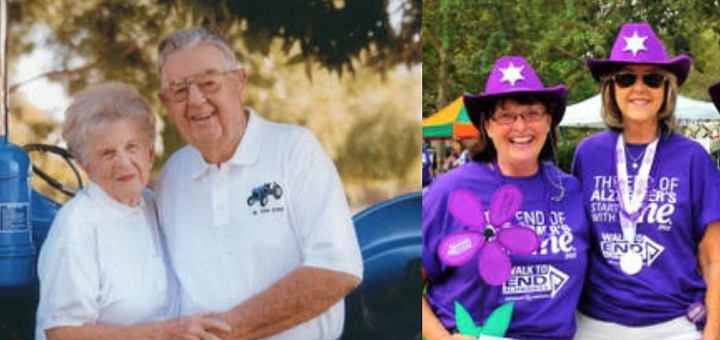
We are just wrapping up our “marching season,” with Walks to End Alzheimer’s from Fresno to Redding. I was in San Francisco, Sacramento, San Jose and Redding. I love these events for many reasons – the positive energy, the diversity, the sense of engagement, the awareness, the homemade signs and team shirts… oh, yeah and the money. I would be less than candid if I didn’t acknowledge that the Walks generate about 20 percent of our budget and it’s key to our ability to do what we do.

I meet strangers and I thank them for coming out to support the cause and the darndest thing happens… Continue reading “Walk to End Alzheimer’s 2011 – some reflections” »

Alz Profile: Kathleen Zalecki, Living With Alzheimer’s

In January of 2009, Greenbrae, Calif., resident Kathleen Zalecki was approached by her daughters who expressed concerns about her memory. As an active almost-65-year-old who cycled regularly and was living a full and busy life, the conversation was challenging.

“My first reaction was denial and anger; what they were saying was difficult to hear and accept,” says Kathleen. “But I was eventually able to recognize changes that were becoming problematic and I agreed to get tested.”

Continue reading “Alz Profile: Kathleen Zalecki, Living With Alzheimer’s” »

Today’s heros: Our Early Stage Support Group

Leave a comment below to let us know about the everyday heroes in your life! In honor of Alzheimer’s Action Day on September 21, we are highlighting 21 Everyday Heroes. Today, we’re rounding out our last heroes by highlighting the amazing people with Early Stage Alzheimer’s in one of our support groups. This extraordinary group meets to support each other, share stories, give advice — but they are passionate about raising awareness of what it’s like to have this disease. We’ll be featuring content on our blog from them as they tell us what they want everyone to know about Alzheimer’s. For starters, they answer the question “What advice would you give someone who was just diagnosed with Alzheimer’s?” Here’s what they have to say:

  • Find a group! You be able to learn from others, identify with what others are talking about and feel supported by the group. It’s an opportunity to speak openly and honestly.
  • Talk to a physician about Alzheimer’s disease and make sure they do a brain scan
  • At the beginning, we felt: Anger – didn’t want to tell everyone; Denial – thinking it will go away; Vulnerability – my role was taken away from me; Sadness – I didn’t think it was true
  • Just give yourself time and freedom
  • Keep trying, even on the rough days
  • This disease is challenging
  • Routine can be comforting
  • It’s not going to go away
  • Go with the flow

Copyright © 2013 Alzheimer's Association. All Rights Reserved.

Through this website you are able to link to other websites which are not under the control of the Alzheimer’s Association. We have no control over the nature, content and availability of those sites. The inclusion of any links does not necessarily imply a recommendation or endorse the views expressed within them.

Chapter Headquarters
Alzheimer's Association of Northern California and Northern Nevada
1060 La Avenida, Mountain View, CA 94043 Phone 650.962.8111

National Headquarters
Alzheimer's Association National Office 225 N. Michigan Ave., Fl. 17, Chicago, IL 60601 Alzheimers and Dementia Blog – Alzheimers Association of Northern California and Northern Nevada

Built on Notes Blog Core
Powered by WordPress